TL;DR: Most small-business sites in 2026 land between $2,500–$15,000, serious growth sites run $15,000–$60,000, and enterprise/headless/ecommerce builds range $60,000–$300,000+. Ongoing costs (hosting, care, content, SEO) typically add $350–$5,000+/mo. Skip hype—pay for the bits that make you money.
Quick Summary:
- Custom website cost 2026: $2.5k–$300k+, based on scope, integrations, and content model.
- “Vibe-coded” (hand-coded) builds trade speed and control for higher dev cost; templates trade price for constraints.
- Headless CMS and content hubs cost more upfront but reduce long-term publishing friction.
- Ecommerce adds complexity: catalog size, checkout, ERP/OMS/CRM integrations drive price.
- Budget for monthly care: hosting, updates, CRO, and SEO push ROI—not just pixels.
The 2026 Website Pricing Playbook
1) What does a “custom website” actually include?
A custom website is a site planned around your business model, not a theme, because it prioritizes conversions, speed, and content governance over decoration.
Deliverables usually include information architecture, UX/UI, component library, CMS setup, performance budgeting, analytics, and launch support.
Internal helpers: If you’re new, start with our website creation overview for scope planning.
2) Is the $150–$500 “cheap site” real, and what do you get?
Yes—$150–$500 buys a minimal, template one-pager because the labor is near zero and features are fixed.
Expect a basic template, logo swap, one contact form, and almost no customizations. Good for very short-term proof-of-existence pages. I will say, I have delivered some nice site for under $300. Just have to use the budget wisely.
3) When does it jump to $2,500–$7,500?
Small-business sites cost $2,500–$7,500 because content design, speed, and brand fit take real hours even with themes.
You’ll see a CMS, a few reusable components, branded styles, and light on-page SEO (titles, structured headings, compression). Now, some site like these can be done by yourself. It all depends on how much time you have to invest in making it right.
We have seen a lot of clients come in with their similar sites and have done great with them, and we only needed to tweak a few things. But normally most build them wrong and they can be hard to fix after Google sees them.
For content and syndication plans that keep this range efficient, see content creation and content syndication service.
4) What does “vibe-coded” mean—and is it worth it?
“Vibe-coded” means hand-coded (framework-first) builds where devs craft exactly the interactions, speed budget, and content model you want.
It outperforms themes for Lighthouse scores, Core Web Vitals, and brand control—but you’ll pay for the skill and QA.
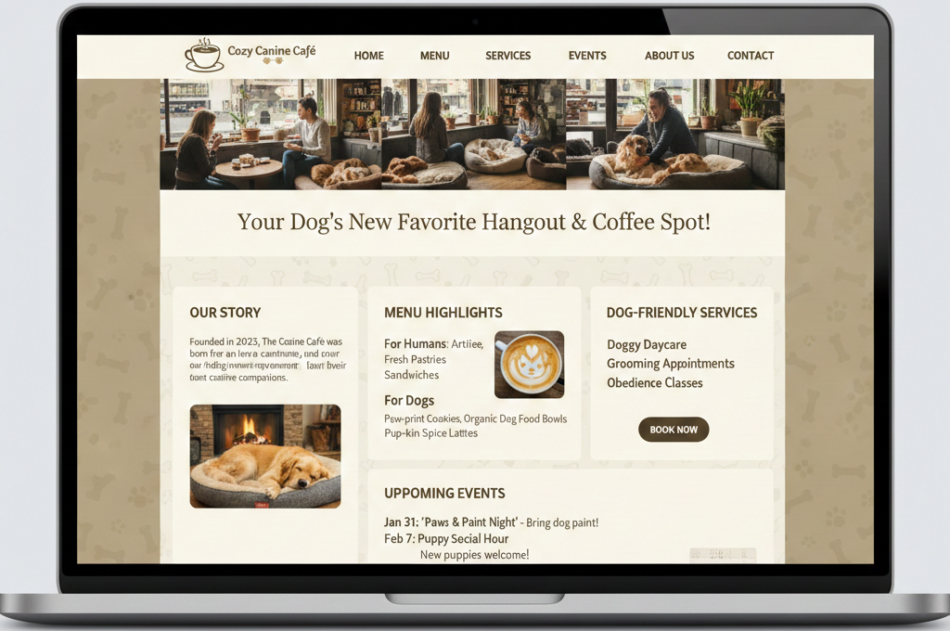
We have “vibe-coded” quite a few sites in our time; more sites now with AI tools that help our speed and security of the sites. So let us create your fantasy. We have a few here you can check out.
Explore a Few of Our Built Sites
Vibe-coded beats theme-only when lifetime ROI from speed + UX exceeds the extra dev cost.
If your customers convert on mobile and you care about organic traffic, that’s usually the case.
5) Where do headless CMS builds fit in 2026?
Headless CMS sites cost more upfront because you’re funding an internal publishing machine, not a brochure.
They separate front end from CMS, support multi-brand/multi-region, and make programmatic content safer.
Want the API-first route? Our Headless CMS development services cover architecture + ops checklists.
Price Tiers You Can Actually Use (2026)
DIY / One-Pager ($150–$500). Template swap, contact form, single page. Good as a placeholder while you prep assets.
Starter SMB Theme ($800–$2,500). Basic theme on WordPress or Webflow. Five-ish pages, simple lead form, light analytics, minimal custom dev.
Small Biz Custom ($2,500–$7,500). Semi-custom design mapped to your offer ladder, componentized sections (hero, features, proof, CTA), blog, on-page SEO. Pair with on-site optimization to avoid shipping slow.
Vibe-Coded Custom ($6,000–$20,000). Hand-coded front end, tighter CLS/LCP, custom interactions, API hooks, and a smaller plugin surface. Great for “brand-as-moat” companies.
Headless CMS ($12,000–$50,000+). Next-level workflows, sections as content types, granular roles, localization, editorial preview. Often pairs tools like Sanity or Contentful for structured content, deployed to Vercel.
Growth Content Hub / Thousands of Pages ($60,000–$250,000+). Think libraries, city pages, knowledge bases, and programmatic clusters. Includes content ops, internal search, and schema automation. If SGE/AI Overviews are in scope, read our No-Nonsense AI Overviews Ranking Guide for playbooks.
Ecommerce (Ranges by catalog + integrations):
- Micro catalog (≤100 SKUs) on Shopify or theme-based: $5,000–$25,000.
- Mid-market (hundreds/thousands SKUs), custom filters, subscriptions, multilingual, tax/shipping automations: $25,000–$100,000.
- Enterprise (custom checkout, ERP/OMS/CRM integrations, complex pricing): $100,000–$300,000+.
Ongoing Care (Monthly):
Hosting/CDN $10–$300+, monitoring/updates $150–$1,500+, CRO/AB testing $500–$4,000+, SEO/content $1,000–$8,000+. If you want one vendor accountable for outcomes, our full suite of digital services is the “one throat to choke.”
Why the same site can be $7.5k or $60k
Scope ≠ page count; scope = decisions.
Complex auth, pricing logic, dashboards, calculators, booking flows, or 3rd-party APIs multiply QA and security work.
Content is the cost driver that never looks like “development.”
If you need productized landing pages, multi-region copy, or a programmatic strategy, budget writing, design, schema, and publishing ops up front.
Integrations are where timelines go to die.
CRMs, CDPs, inventory, events, and customer data must be reconciled and tested. A $3k “glue” step can save a $30k headache.
Performance is a business feature, not a developer hobby.
Speed budgets, image automation, and cache strategy reduce CAC and boost conversion rates—especially on mobile.
Vibe-Coded vs. Theme-Based vs. Headless (2026 reality check)
Theme-based: Fastest to launch, cheapest. You live inside plugin ecosystems and their limits. Great for early validation.
Vibe-coded (hand-coded): Greatest control, best performance, cleanest long-term maintenance. Requires skilled dev + QA.
Headless: Editorial power and multichannel speed. Pricier up front; pays off when publishing velocity matters.
Choose the lowest-cost model that won’t block conversions or publishing for the next 12 months.
That’s the pragmatic 2026 rule.
Sample Scopes & What They Cost (best-practice ranges)
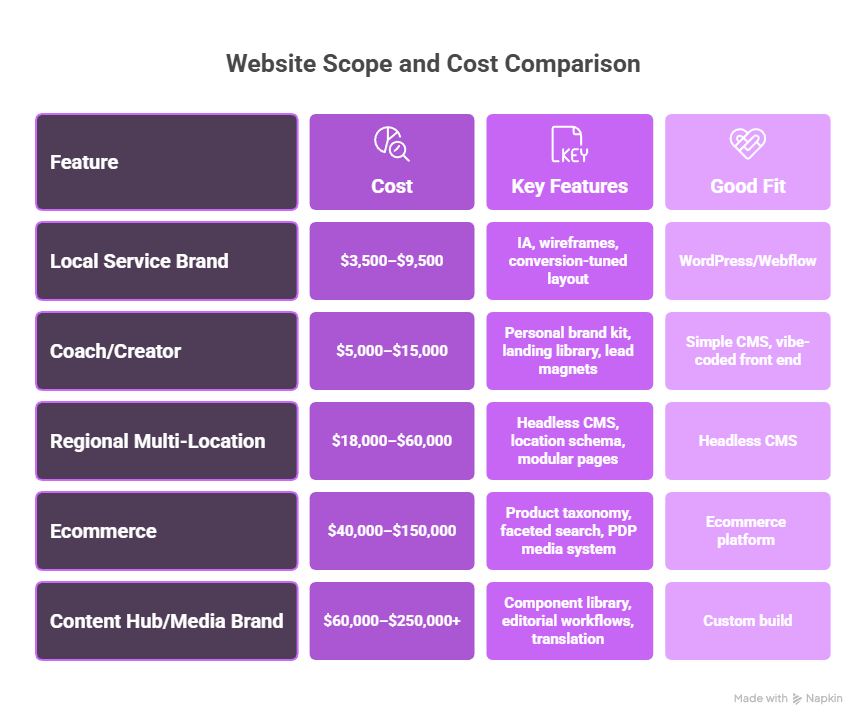
- Local Service Brand (HVAC, legal, home services) – $3,500–$9,500
- IA + wireframes; 8–12 pages; conversion-tuned layout; review widgets; schema; speed budget; launch support.
- Optional: service-area pages + FAQ video shorts (adds $1k–$4k).
- Good fit: theme-based or semi-custom WordPress/Webflow.
- Coach/Creator – $5,000–$15,000
- Personal brand kit; landing library; lead magnets; course/paywall; analytics + email integrations.
- Good fit: vibe-coded front end, simple CMS; optional headless if publishing heavy.
- Regional Multi-Location (10–50 locations) – $18,000–$60,000
- Headless CMS with location schema, modular pages, role-based workflows, QA pipeline, and CI/CD.
- Adds GMB automation, location-level reviews, and programmatic city pages.
- Ecommerce (1k–10k SKUs) – $40,000–$150,000
- Product taxonomy, faceted search, PDP media system, subscriptions, loyalty, warehouse/ERP.
- Speed budget for LCP/INP, image/CDN rules, and RUM dashboards.
- Content Hub / Media Brand – $60,000–$250,000+
- Component library, editorial workflows, translation, internal search, recommendations, and ads stack.
- Built to serve thousands of pages with GEO/SGE-friendly structure.
Budget traps to avoid (2026)
- Under-scoping content. Pages need copy, images, CTAs, schema, and QA. Plan them.
- No performance budget. You’ll pay for slow sites in ads and lost conversions.
- Custom before clarity. Prove the offer and funnel with a theme; then invest in custom.
A cheap site is affordable when your risk is learning; a custom site is affordable when your risk is growth.
Tools & Platforms (choose by workflow, not hype)
- CMS & Builders: WordPress, Webflow
- Headless CMS: Sanity, Contentful
- Hosting/Edge: Vercel
Need help picking a stack? Skim our services overview and then schedule a meeting.
FAQs (the quick-answer section)
What is the average cost of a custom website in 2026?
$2,500–$15,000 for most small businesses; $15,000–$60,000 for growth sites; $60,000–$300,000+ for enterprise/headless/ecommerce.
Is a vibe-coded site better than a theme?
It’s better when speed, brand control, and integrations materially affect revenue. Otherwise, launch with a theme and upgrade later.
How much does a headless CMS site cost?
Most marketing sites run $12,000–$50,000+, with content hubs going $60,000–$250,000+ depending on workflows and volume.
What ongoing costs should I budget?
Hosting + care start around $350/mo and scale with monitoring, CRO, SEO, and content.
Where should I start if I’m totally new?
Start here: website creation. Then graduate to Headless CMS development if publishing speed becomes your bottleneck.