Using DATA ANALYTICS for Marketing Performance
TL;DR: Data analytics helps you stop guessing and start making smarter marketing decisions. Instead of throwing money at ads, blogs, social posts, or SEO work and hoping something sticks, analytics shows what is actually working, what is wasting money, and where your next opportunity is hiding.
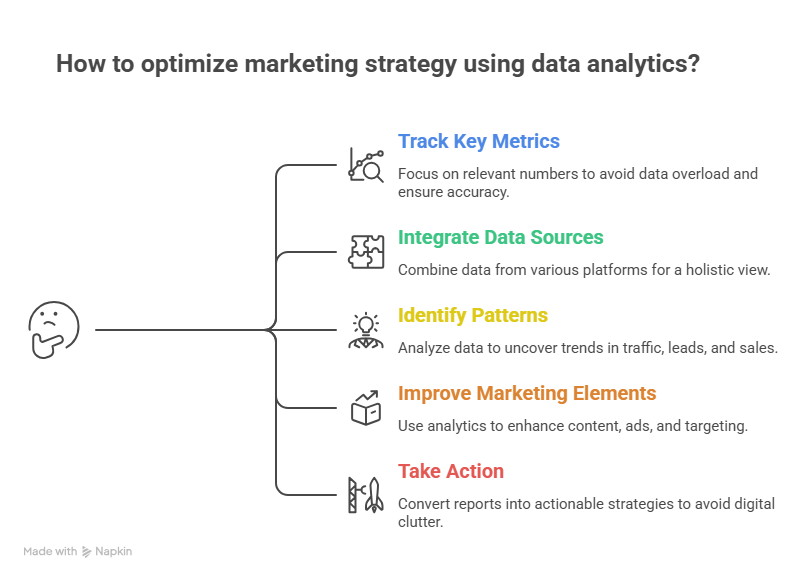
- Track the right numbers, not every number.
- Use website, SEO, PPC, social media, and conversion data together.
- Look for patterns in traffic, leads, calls, rankings, clicks, and sales.
- Use analytics to improve content, paid ads, landing pages, and customer targeting.
- Turn reports into action, because data without decisions is just digital clutter.
Marketing without data is basically driving with a dirty windshield. You might be moving, but you’re not seeing enough to know if you’re headed in the right direction. That’s where data analytics changes the game.
For small businesses, local service companies, online brands, and growing websites, marketing analytics gives you a clearer view of what people are doing before they call, click, buy, book, or leave. It helps you understand your audience, improve your campaigns, and stop wasting money on things that sound good but don’t actually produce results.
At Digital Goliath Marketing, we look at analytics as one of the most important parts of modern digital marketing. Not because business owners need more confusing charts, but because they need better answers.
What Is Marketing Data Analytics?
Marketing data analytics is the process of collecting, reading, and using marketing data to improve performance. That data can come from your website, Google Search Console, Google Analytics, paid ads, social media platforms, email marketing tools, call tracking, CRM software, and even customer behavior on individual landing pages.
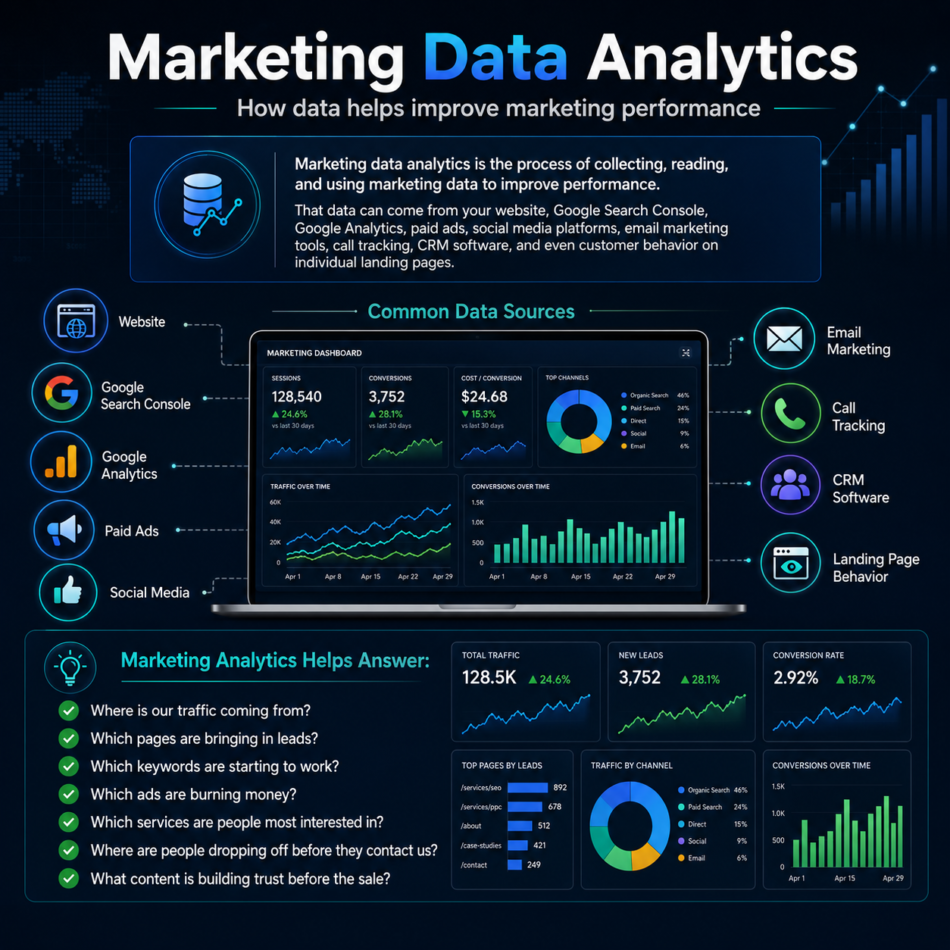
In plain English, marketing analytics helps answer questions like:
- Where is our traffic coming from?
- Which pages are bringing in leads?
- Which keywords are starting to work?
- Which ads are burning money?
- Which services are people most interested in?
- Where are people dropping off before they contact us?
- What content is building trust before the sale?
That last one matters more than a lot of people realize. Modern marketing isn’t just about getting clicks anymore. It’s about building trust across search engines, AI tools, social platforms, directories, review sites, and your own website. That’s why services like brand mentions, Clearwater SEO services, and content marketing all work better when they’re guided by real performance data.
Why Data Analytics Matters for Better Marketing Performance
Every business owner has opinions. Every marketer has theories. Every platform has its own dashboard trying to tell you it deserves more money. Data helps cut through the nonsense.
Good analytics can show whether your marketing strategy is actually helping your business grow. It gives you evidence instead of feelings. That doesn’t mean instinct doesn’t matter. It does. But instinct works a lot better when it has numbers backing it up.
For example, a page might not be getting tons of traffic yet, but it may be getting strong impressions in Google Search Console. That means Google is testing it. With the right SEO improvements, better internal links, stronger headings, and clearer content, that page could become a real traffic asset.
That’s a smarter move than randomly posting another blog article just because someone said, “You need more content.”
The Marketing Metrics That Actually Matter
One of the biggest mistakes businesses make is tracking too much. You don’t need to drown yourself in 47 different reports. You need to focus on the numbers that connect to real business outcomes.
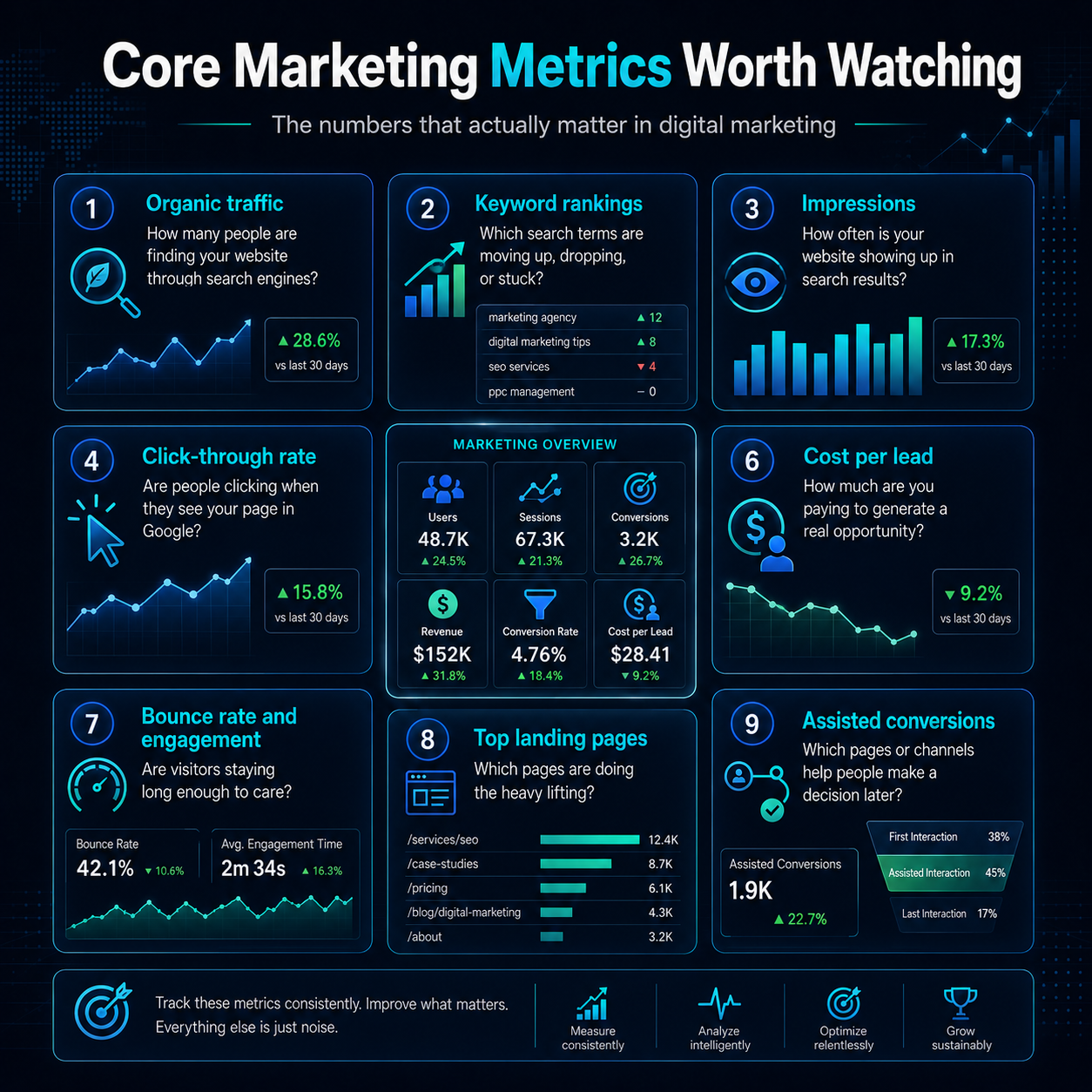
Here are the core marketing metrics worth watching:
- Organic traffic: How many people are finding your website through search engines?
- Keyword rankings: Which search terms are moving up, dropping, or stuck?
- Impressions: How often is your website showing up in search results?
- Click-through rate: Are people clicking when they see your page in Google?
- Conversion rate: How many visitors become leads, calls, bookings, or buyers?
- Cost per lead: How much are you paying to generate a real opportunity?
- Bounce rate and engagement: Are visitors staying long enough to care?
- Top landing pages: Which pages are doing the heavy lifting?
- Assisted conversions: Which pages or channels help people make a decision later?
For local businesses, this can also include phone calls, form submissions, map clicks, driving direction requests, service area searches, and city-specific landing page performance. If your company depends on leads, your analytics should be tied directly to lead generation, not vanity traffic.
That’s especially important for companies investing in local SEO, lead generation, or PPC management.
Start With Clear Marketing Goals
Before you look at any data, you need to know what you’re trying to improve.
Are you trying to get more local leads? More calls? More quote requests? Better rankings? More qualified traffic? More online sales? More visibility in AI search tools? Each goal changes what numbers matter most.
A home service company might care most about phone calls and city page rankings. A cannabis travel website might care about hotel clicks, directory listings, state page traffic, and brand visibility. A B2B service company might care about contact form submissions, trust-building content, and branded search growth.
The point is simple. Your analytics should match the business model.
Use Website Analytics to Find What People Actually Do
Your website analytics can tell you how people behave once they land on your site. This is where tools like Google Analytics, Microsoft Clarity, Hotjar, call tracking, and conversion tracking can help.
You want to know:
- Which pages bring in the most traffic?
- Which pages keep people engaged?
- Which pages make people leave?
- Which buttons get clicked?
- Which forms get started but not finished?
- Which services are people viewing before they contact you?
This is where small changes can create big wins. Sometimes the traffic is already there. The problem is the page doesn’t explain the offer clearly enough, the call-to-action is weak, or the visitor doesn’t know what to do next.
A strong website design strategy isn’t just about looking good. It’s about helping visitors move from interest to action without making them work too hard.
Use SEO Data to Improve Rankings and Content Strategy
SEO analytics gives you a better view of how your site is performing in search engines. Google Search Console is one of the most useful tools here because it shows impressions, clicks, average position, and the exact search queries people use to find your pages.

This data can help you find quick opportunities.
For example:
- A page ranking in positions 8 to 20 may need stronger content and internal links.
- A page with high impressions but low clicks may need a better title tag and meta description.
- A blog post ranking for unexpected keywords may deserve a follow-up article.
- A service page with weak impressions may need better topical support from related blogs.
- A city page with traffic but no leads may need a stronger CTA and clearer local proof.
This is why content strategy and SEO analytics should work together. You don’t just publish content and walk away. You publish, track, improve, interlink, and build topical authority over time.
If your website needs stronger topical structure, Digital Goliath’s SEO content strategy approach focuses on connecting service pages, supporting blogs, local pages, and trust-building content into one cleaner system.
Use Internal Linking Data to Strengthen Important Pages
Internal links are one of the most overlooked parts of SEO. They help visitors move through your site, and they help search engines understand which pages matter most.
If you have a major service page, that page shouldn’t sit alone like a forgotten island. It should be supported by related blog posts, case studies, FAQ pages, location pages, and other useful resources.
For this article, a smart internal linking structure would point readers toward pages like:
This helps connect the topic of marketing analytics to the actual services that improve performance. That’s good for users, good for SEO, and good for conversions.
Use PPC Analytics to Stop Wasting Ad Spend
Paid ads can work extremely well, but only if the numbers make sense. Too many businesses run ads, get clicks, and assume the campaign is doing its job.
Clicks don’t pay the bills. Leads and sales do.
With PPC analytics, you should be looking at:
- Cost per click
- Cost per lead
- Conversion rate
- Search terms triggering your ads
- Landing page performance
- Device performance
- Location performance
- Time-of-day performance
Sometimes the problem isn’t the ad. It’s the landing page. Sometimes the landing page is fine, but the search terms are junk. Sometimes the leads are coming in, but they’re low quality because the offer is too broad.
Analytics helps you find the leak instead of blaming the whole system.
Use Social Media Analytics to Find Real Engagement
Social media analytics can show which posts get attention, but attention alone isn’t always the goal. A funny post might get reactions. A practical post might get leads. A strong opinion might build brand recognition. A short video might introduce your business to a new audience. The key is knowing what each post is supposed to do.
Look at:
- Reach
- Engagement rate
- Profile visits
- Link clicks
- Comments and saves
- Follower growth
- Traffic from social platforms
- Leads or calls connected to social campaigns
Social media can also support SEO and brand trust. When people see your company in multiple places, they’re more likely to recognize you later in search results, AI answers, directories, and review platforms.
That’s where digital marketing services need to work as a system instead of a bunch of disconnected tasks.
Use Customer Data to Improve Targeting
Data analytics isn’t only about traffic. It’s also about understanding who your best customers are.
Look at your past leads and customers. Which ones were the most profitable? Which services did they buy? Where were they located? What problem did they need solved? How did they find you? What content did they interact with before they reached out?
This type of customer data helps you build better campaigns because you’re no longer trying to reach everyone. You’re trying to reach the right people.
That improves:
- Ad targeting
- Landing page copy
- Email campaigns
- Blog topics
- Service page messaging
- Local SEO targeting
- Sales follow-up
Better targeting usually means better conversion rates. And better conversion rates mean you can get more from the same traffic.
Turn Analytics Into Action
This is where a lot of businesses drop the ball. They look at reports. They nod. They say, “Interesting.” Then nothing changes. That’s not analytics. That’s dashboard theater.
Marketing data only matters when it leads to decisions. If a page has strong impressions and weak clicks, update the title and meta description. If a service page gets traffic but no leads, improve the offer and CTA. If a blog post ranks well, add internal links to your money pages. If paid ads are bringing bad leads, tighten the keywords and landing page copy.
Every report should lead to one of these actions:
- Improve something
- Remove something
- Test something
- Scale something
- Stop wasting money on something
That’s how data analytics actually boosts marketing performance.
Build an Analytics Routine You Can Stick With
You don’t need to check every dashboard every day. That’s how people burn out and start chasing noise.
A simple monthly marketing analytics routine works better for most businesses.
Each month, review:
- Top traffic pages
- Top converting pages
- Search queries gaining impressions
- Pages losing clicks or rankings
- Paid campaign cost per lead
- Best and worst landing pages
- Social posts that drove real engagement
- New internal linking opportunities
- Content that needs updating
Then pick a few clear actions for the next month. Don’t overcomplicate it. A business that makes three smart improvements every month will usually outperform a business that stares at data every week and does nothing.

Marketing Analytics and E-E-A-T
E-E-A-T stands for experience, expertise, authoritativeness, and trustworthiness. It matters because Google and users both need reasons to trust your website.
Analytics can help improve E-E-A-T by showing you where trust is weak.
For example, if visitors land on a service page and leave quickly, the page may not be showing enough proof. You may need better examples, clearer explanations, stronger author information, testimonials, case studies, FAQs, or links to related resources.
If people are finding your blog posts but not your service pages, you may need better internal links and stronger calls-to-action. If branded searches are growing, that may show your broader marketing is building recognition.
This is also why brand visibility matters beyond your own website. Search engines and AI tools look for signs that your business is being discussed, referenced, and connected across the web. A smart brand mentions strategy can help strengthen those signals over time.
Common Mistakes Businesses Make With Marketing Data
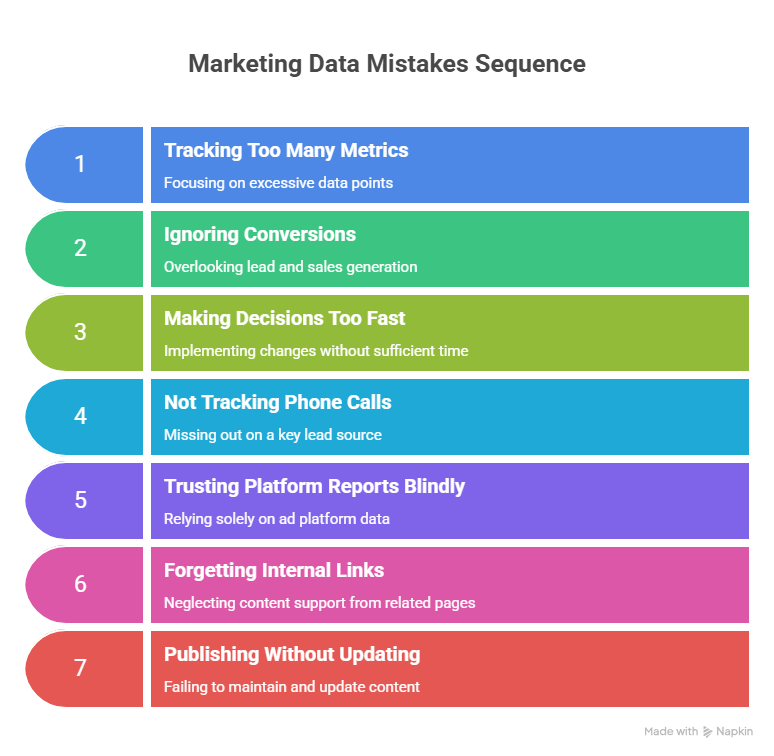
Data is useful, but only if you read it correctly. Here are some common mistakes to avoid:
- Tracking too many metrics: More numbers don’t automatically mean better decisions.
- Ignoring conversions: Traffic is nice, but leads and sales matter more.
- Making decisions too fast: Some SEO and content changes need time to show results.
- Not tracking phone calls: Many local businesses miss their most important lead source.
- Trusting platform reports blindly: Ad platforms love giving themselves credit.
- Forgetting internal links: Strong pages need support from related content.
- Publishing without updating: Content needs maintenance, not just creation.
The biggest mistake is treating analytics like a separate task instead of part of your marketing system.
Final Thoughts: Better Data Means Better Marketing Decisions
Data analytics won’t magically fix bad marketing. But it will show you where the problems are.
It can show you which pages need work, which ads need to be cut, which keywords are moving, which content deserves more internal links, and which campaigns are actually helping your business grow.
The goal isn’t to become obsessed with reports. The goal is to make better decisions faster.
If your marketing feels scattered, your traffic is unpredictable, or you’re spending money without knowing what’s really working, Digital Goliath Marketing can help you turn the numbers into a cleaner strategy.
Need help making sense of your website, SEO, content, PPC, or lead generation data? Start with Digital Goliath Marketing’s digital marketing services and let’s find out what’s working, what’s broken, and what needs to happen next.